Whole Brain Child Parenting Strategies | A 12-Part Series for Indian Parents
Discover Dr. Daniel Siegel's 12 whole-brain parenting strategies explained for Indian parents. Learn how to calm meltdowns, build emotional intelligence, and connect with your child, backed by neuroscience.
Preeti Toraskar
1/11/20265 min read


What If the Way We're Parenting Is Missing Something Essential?
A 12-Part Series on Raising Emotionally Intelligent Children - Backed by Brain Science
When Aarya was little, there was a phase where she was terrified of the moon.
Not monsters under the bed. Not the dark. The moon.
She'd look up at the sky and her whole body would tense. "What Aarya is scared about - Moon," she'd announce, in that third person way toddlers sometimes talk about themselves. And I would do what most parents do, I would reassure her. "There's nothing to be scared of, baby. The moon is beautiful. It's so far away. It can't hurt you."
Logical, right?
But here's what I didn't understand then, logic doesn't reach a frightened child.
Her fear didn't go away because I explained it away. It just went underground. She stopped talking about it, but I don't know if she ever truly felt safe with the night sky.
Years later, when I began studying the brain and when I am trained with Dr. Daniel Siegel and dove deep into developmental psychology, I finally understood what I had missed.
When Aarya said she was scared of the moon, her right brain - the emotional, nonverbal, experiential part that was flooded with fear. Her little body was in alarm mode.
And what did I do? I came at her with left brain logic. Words. Explanations. Reasons.
It's like speaking English to someone who only understands Hindi. The message simply doesn't land.
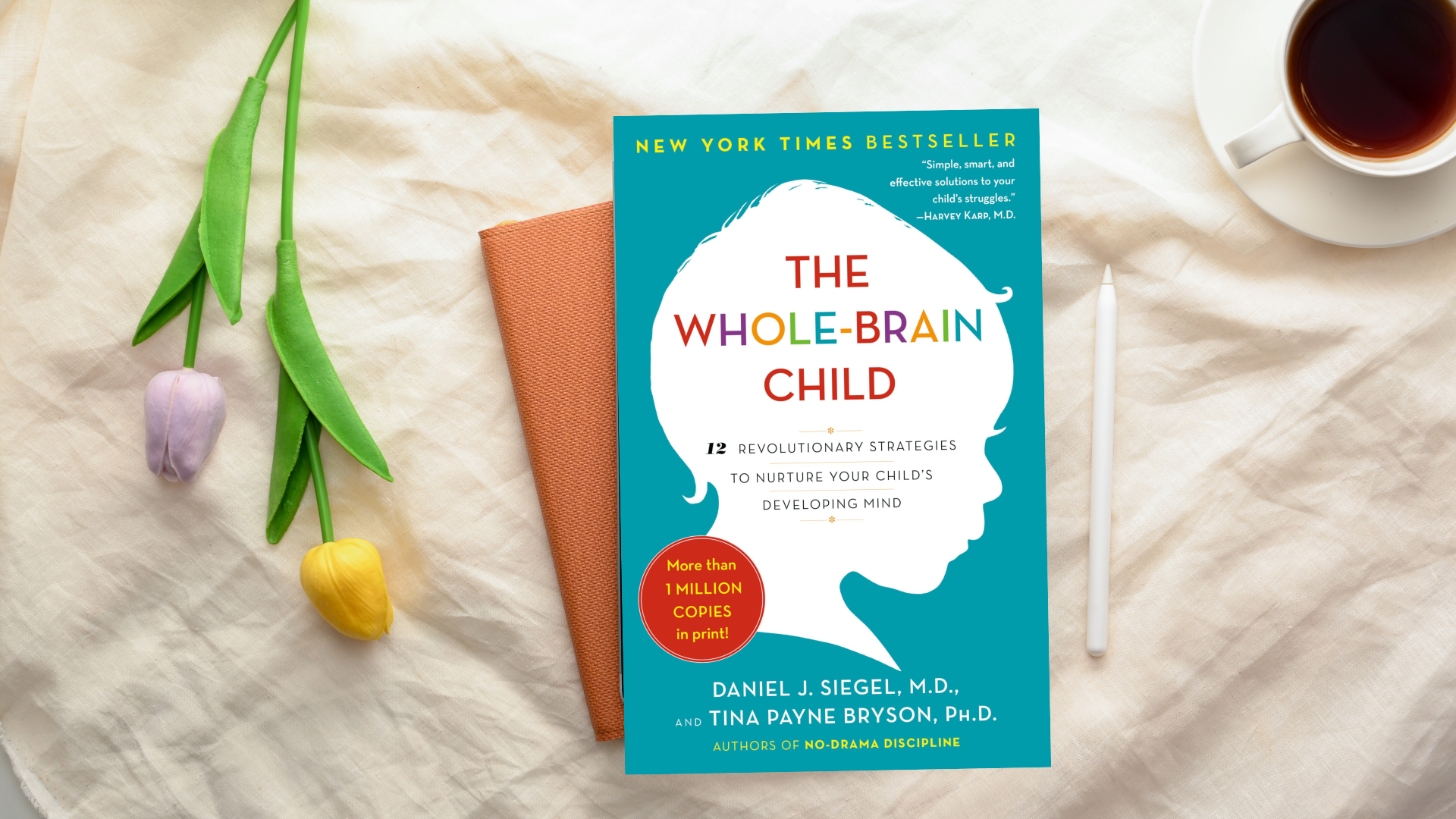
What she needed, according to the research of Dr. Daniel Siegel and Dr. Tina Payne Bryson in their groundbreaking book The Whole-Brain Child, was something different. She needed me to connect with her right brain first, to acknowledge the fear, to sit with her in it, to let her feel felt, before I tried to redirect with logic.
And then? She needed to tell the story of her fear. To name it. Because, as the neuroscience shows, when we name an emotion, we begin to tame it. The simple act of putting words to a feeling activates the left brain and helps integrate the experience.
I could have said: "You're looking at the moon and you feel scared. Tell me about that. What does the moon do that feels scary?"
I could have let her draw the moon. Talk to it. Create a story about it.
Instead, I rushed to fix.
This isn't a confession of parental failure. It's a recognition of what most of us were never taught, how to work with a child's developing brain, not against it.
Why I'm Writing This Series
I have spent the last several years immersing myself in the science of how children develop - not just physically, but emotionally, psychologically. I have trained with Dr. Daniel Siegel, whose work on interpersonal neurobiology has shaped how I understand the developing mind. I am currently completing my Master's in Expressive Movement Therapy, learning how the body holds what the mind sometimes can't process.
And through all of this, one book keeps coming back to me is 'The Whole-Brain Child.'

It's not a spiritual book. It's not about positive affirmations or raising "good" children. It's about understanding what's actually happening inside your child's brain when they throw a tantrum, refuse to listen, melt down over something "small," or shut down completely.
And more importantly, it gives you 12 practical strategies backed by neuroscience, to help your child's brain develop in integrated, healthy ways.
Over the next six weeks, I will be breaking down each of these 12 strategies for you. Every Tuesday and Friday, a new blog will arrive, written not as a clinical manual, but as a conversation between parents. With real examples. With the mistakes I have made. With the science translated into something you can actually use at the dinner table, during homework battles, and in those 9 PM meltdowns that make you question everything.
What You'll Explore in This Series
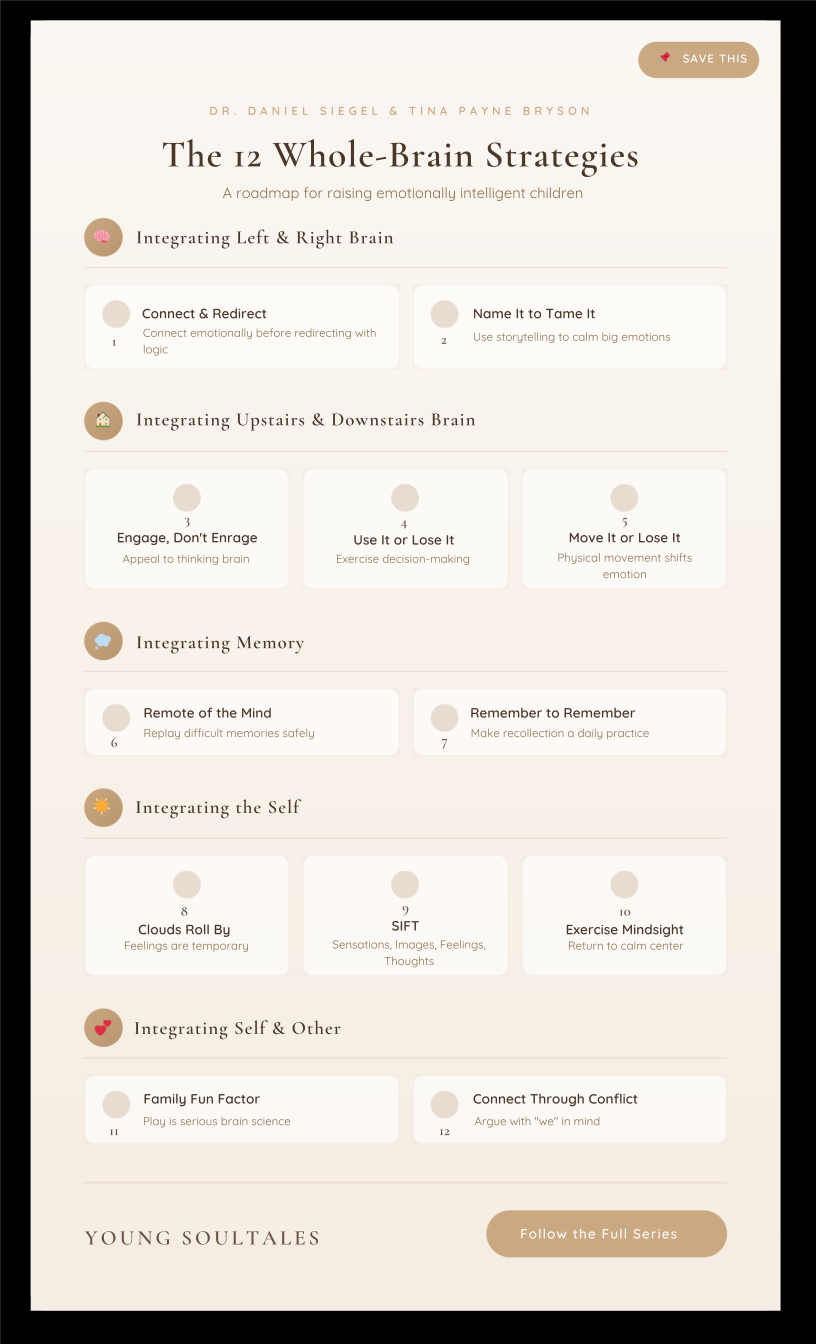
Here is a preview of the 12 whole-brain strategies we will explore together:
Integrating Left & Right Brain:
Connect and Redirect - Why logic fails during a meltdown, and what to do instead
Name It to Tame It - How storytelling calms big emotions (what I wish I'd done with Aarya's moon fear)
Integrating the Upstairs & Downstairs Brain: 3. Engage, Don't Enrage - How to keep your child thinking instead of reacting 4. Use It or Lose It - Exercising the decision-making brain 5. Move It or Lose It - Why physical movement changes emotional states
Integrating Memory: 6. Use the Remote of the Mind - Helping kids "replay" difficult memories safely 7. Remember to Remember - Making recollection a daily practice
Integrating the Self: 8. Let the Clouds of Emotion Roll By - Teaching kids that feelings are temporary 9. SIFT - Helping children notice their Sensations, Images, Feelings, and Thoughts 10. Exercise Mindsight - Getting back to calm when overwhelmed
Integrating Self & Other: 11. Increase the Family Fun Factor - Why play is serious brain science 12. Connect Through Conflict - Teaching kids to argue with a "we" in mind
This Is the Missing Education
At Young SoulTales, we talk a lot about "the missing education", the things many schools never teach. How to understand your emotions. How to sit with discomfort. How to know yourself.
This series is part of that mission.
Because parenting isn't just about managing behaviour. It's about shaping a brain. Every interaction you have with your child, every tantrum you navigate, every fear you acknowledge, every story you help them tell, is literally wiring their brain for how they'll handle emotions, relationships, and challenges for the rest of their lives.
That's not pressure. That's possibility.
I don't want you to read these blogs in isolation. I want you to have a space to discuss, ask questions, share your own stories, and connect with other parents who are on this same journey.
Join the Young SoulTales Parents' Circle on WhatsApp. Every time a new blog drops, you'll get it directly - along with discussion prompts, and a community of parents figuring this out together.
The first strategy - Connect and Redirect - drops this Tuesday
See you there.
Preeti Toraskar is the founder of Young SoulTales, where she helps children develop emotional literacy through experiential, psychology-based programs. She is currently completing her Master's in Expressive Movement Therapy and has trained with Dr. Daniel Siegel in developmental psychology. She lives in Pune with her teenage daughter Aarya, who no longer fears the moon -but occasionally still fears math homework.
Coming Up Next (Tuesday): Strategy #1: Connect and Redirect - Why your child can't hear logic when they're upset, and the two-step approach that actually works.
The Science I Wish I'd Known

© 2026 Preeti Toraskar. All rights reserved.